Can You Get Dental Implants With Bone Loss? Success Rates, Bone Grafting Options and What Really Matters
Short answer: yes — alveolar bone atrophy does not rule out dental implants. With a proper 3D assessment and targeted bone grafting, most patients with jawbone loss still achieve implant success rates of 90% or higher. Here is exactly how it works, what the numbers look like, and why waiting is the real risk.
More than 60% of patients with long-term missing teeth develop some degree of alveolar bone resorption. When the tooth root is gone, the jawbone loses the daily stimulation that keeps it dense, and the ridge gradually shrinks in height and width. It is one of the most common findings in implant dentistry — and one of the most solvable.
What Is Alveolar Bone Atrophy (Jawbone Loss)?
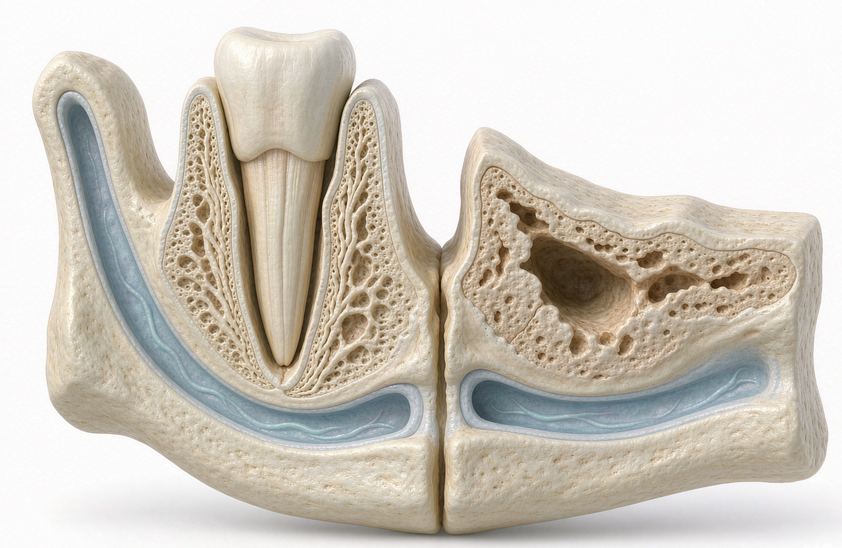
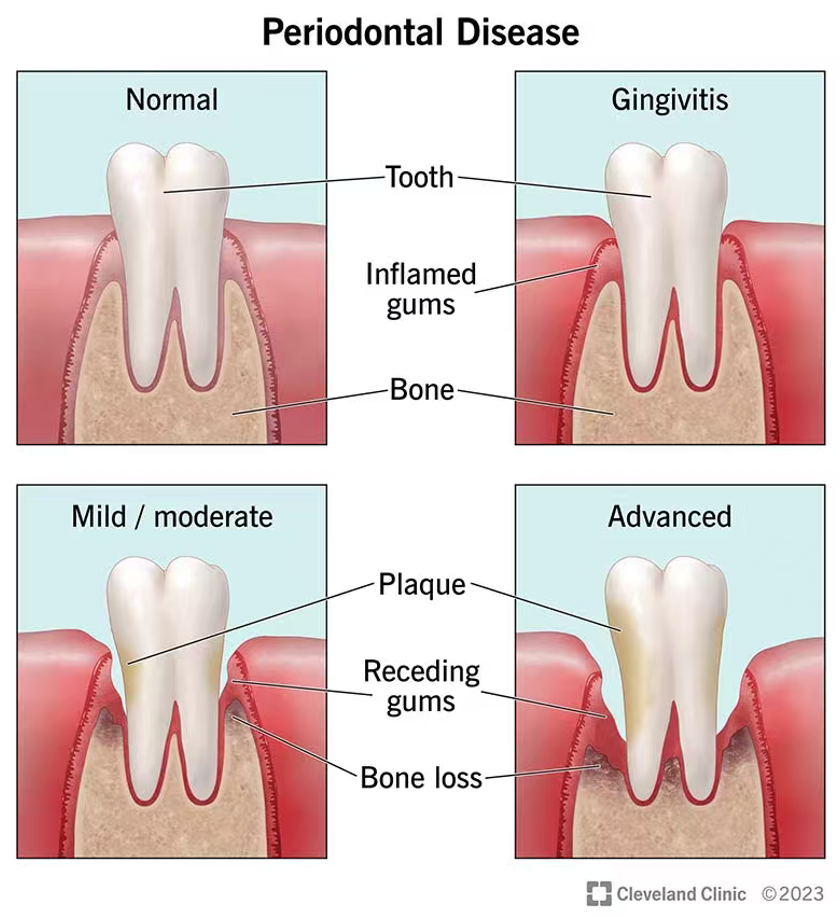
Alveolar bone is the part of the jaw that anchors tooth roots. After an extraction — or after years of wearing removable dentures — that bone resorbs because nothing transmits chewing forces into it. Untreated gum disease (periodontitis), trauma and infection accelerate the process. In the upper back jaw there is an additional challenge: the maxillary sinus expands downward into the space left by the lost bone.
So, Can You Get Dental Implants With Bone Loss?
Yes — but the bone has to be managed, not ignored. Placing an implant directly into severely resorbed bone is like driving a post into loose soil: the fixture is prone to mobility, progressive bone resorption and early failure. This shortcut is exactly where the myth comes from that implants are “unreliable” when bone is thin.
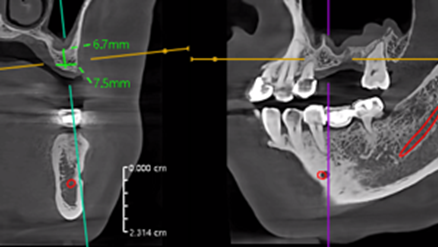
Done properly, the sequence is different: the bone volume is measured on a 3D CBCT scan, the degree of atrophy is classified, and a bone augmentation plan is built around it. Managed this way, success rates in atrophic ridges come remarkably close to those in normal bone.
Dental Implant Success Rates With Bone Loss
The data are reassuring for patients who follow a structured protocol:
Long-term implant success rate by bone condition
For implants placed in sites with adequate native bone, the long-term success rate exceeds 95%. In mild-to-moderate bone atrophy, standardized bone augmentation procedures bring success to 90–94% — with minimal difference compared with patients who have normal bone volume. Even in severe atrophy, customized implant protocols and adjunctive therapies maintain success at approximately 90%.
Why “Just Place It Anyway” Fails
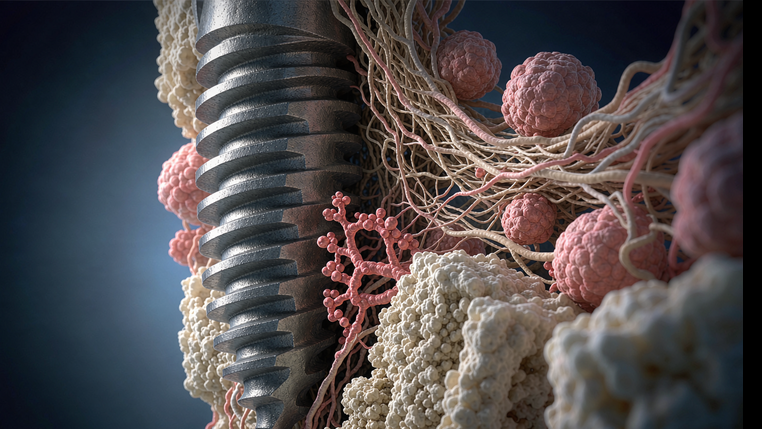
An implant succeeds through osseointegration — the direct, microscopic fusion of living bone to the titanium implant surface. That fusion needs sufficient bone volume and density on all sides of the fixture. Without it, the implant cannot integrate, loads are transmitted abnormally, and early-stage failure rates rise sharply. This is why forcing an implant into insufficient bone is the one approach modern implantology rejects.
How Bone Grafting Rebuilds the Jaw: Proven Options
Well-established clinical protocols exist for every grade of alveolar bone atrophy, and they have been validated by decades of long-term clinical evidence:
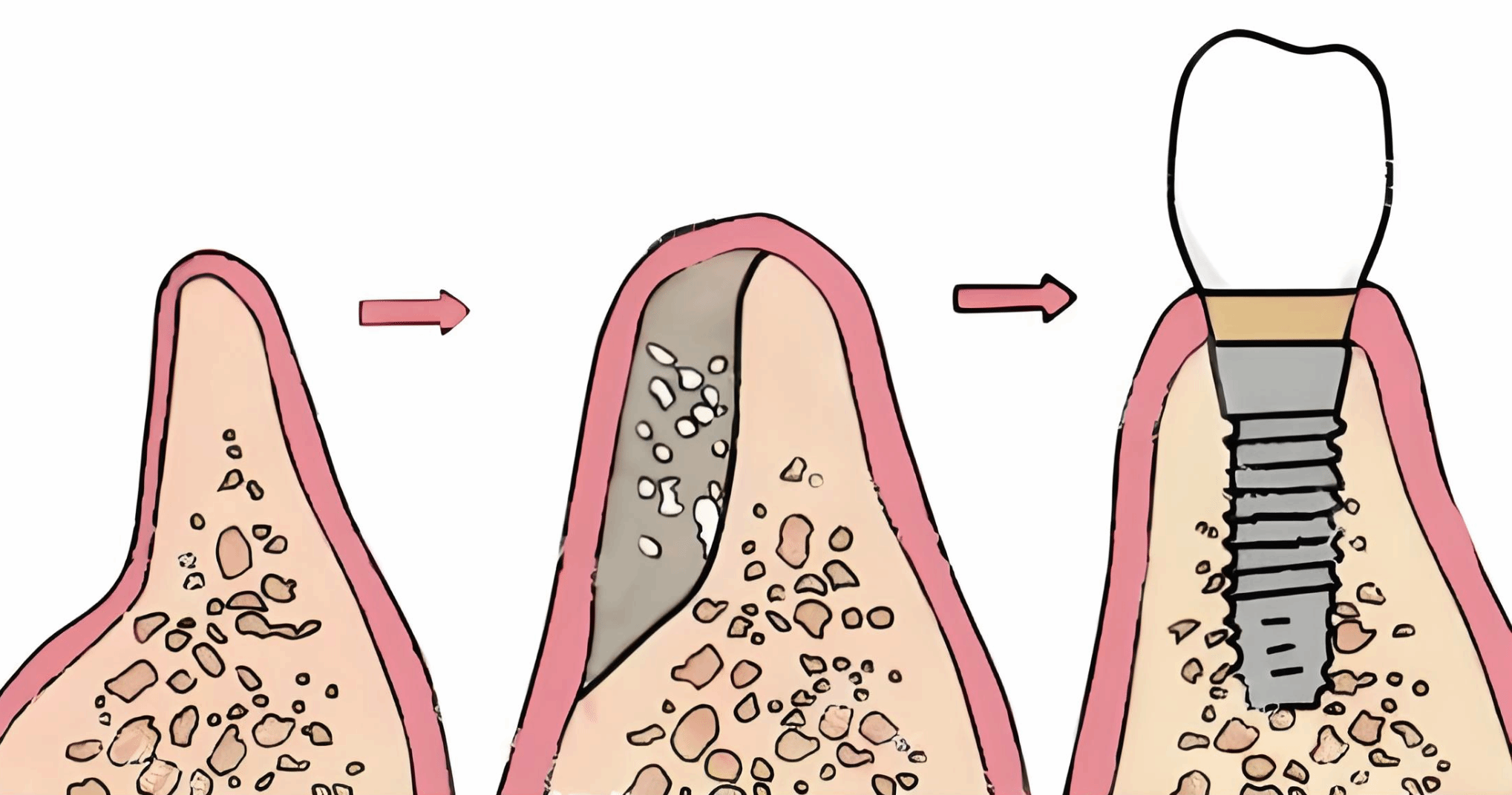
Minor deficiencies: grafting at the time of implant placement
Small bone deficits can often be managed with a simultaneous minor bone graft during the implant surgery itself — one appointment, one healing phase, no extra surgical stage.
Moderate-to-severe atrophy: staged bone augmentation
Guided bone regeneration (GBR): graft material is placed in the defect and protected with a barrier membrane, so slow-growing bone cells — not fast-growing gum tissue — fill the space. Typically rebuilds 3–5 mm of ridge height.
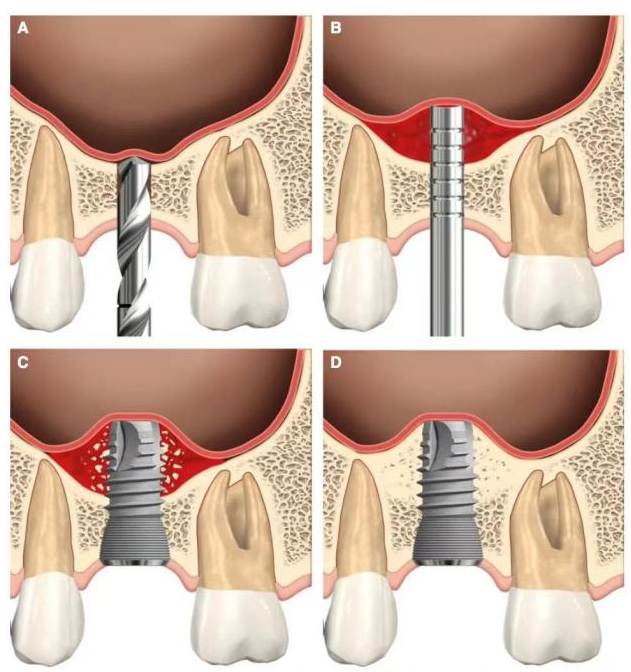
Maxillary sinus elevation (sinus lift): the sinus floor is gently raised and graft material is placed beneath it, creating the bone height needed for upper molar implants. A routine, highly predictable procedure.
Block bone grafting: a solid piece of bone is fixed to the ridge with titanium screws, rebuilding larger vertical and horizontal defects before implant placement.
Alternatives that can reduce or avoid grafting
In selected severe cases, short or tilted implants, All-on-4 full-arch protocols, or zygomatic implants (anchored in the cheekbone when upper-jaw bone is extremely deficient) can deliver fixed teeth while minimizing or bypassing extensive grafting. The right choice depends entirely on your CBCT anatomy and prosthetic goals.
What a Safe, High-Success Implant Plan Looks Like
Alveolar bone atrophy does not predict a poor outcome — an unassessed atrophy does. Patients achieve stable, long-lasting results when four conditions are met:
Treatment is delivered at a qualified clinical facility with implant and bone-grafting experience.
Bone quality and quantity are accurately evaluated with a 3D CBCT scan — never from a 2D image alone.
A personalized implant and grafting plan is formulated for your specific ridge anatomy.
You maintain diligent oral hygiene and regular follow-up maintenance after surgery.
Frequently Asked Questions
Can you get dental implants if you have bone loss?
Yes. With a CBCT-based assessment and, where needed, bone grafting (GBR, sinus lift or block grafting), success rates of 90–94% are achievable in mild-to-moderate bone loss and about 90% even in severe atrophy.
Do I always need a bone graft before a dental implant?
No. Many patients have sufficient bone and need no grafting. A graft is recommended only when the CBCT scan shows insufficient ridge height, width or density for safe stabilization.
How long after tooth extraction does jawbone loss occur?
Resorption begins within months of losing a tooth, because the bone no longer receives chewing stimulation. Early evaluation — ideally at the time of extraction — is the cheapest way to protect bone volume.
Is a dental bone graft painful?
Grafting is performed under local anesthesia, and most patients report manageable soreness and swelling for a few days, similar to other minor oral surgery. Grafted sites typically need 3–9 months to mature before implant placement.
What if I’ve been told I have “no bone” at all?
“Not enough bone” is usually the beginning of planning, not the end of it. Options such as block grafting, sinus elevation, All-on-4 or zygomatic implants restore fixed teeth for many patients who were previously declined elsewhere.
Worried About Bone Loss? Start With a 3D Assessment
Bring your questions and any existing X-rays. A CBCT-based consultation will tell you — before you commit to anything — whether you need grafting, how much, and what your implant timeline looks like.
Book a Bone Assessment ConsultationThis article is for general educational purposes and does not replace a personal clinical examination. Success-rate figures summarize published clinical ranges; individual results vary with bone quality, systemic health, smoking status and maintenance compliance.