Dental Implants Lack a Periodontal Ligament: How Do You Feel Pressure When Chewing?
Dental Implants Lack a Periodontal Ligament: How Do You Feel Pressure When Chewing?
"Doctor, do dental implants actually have any feeling?"
This is one of the most common questions patients ask after getting their permanent implant crowns attached.
The answer is simple: Natural teeth perceive pressure through the periodontal ligament, while dental implants rely on a mechanism called "osseoperception."
Natural Teeth vs. Dental Implants: How Sensation Works
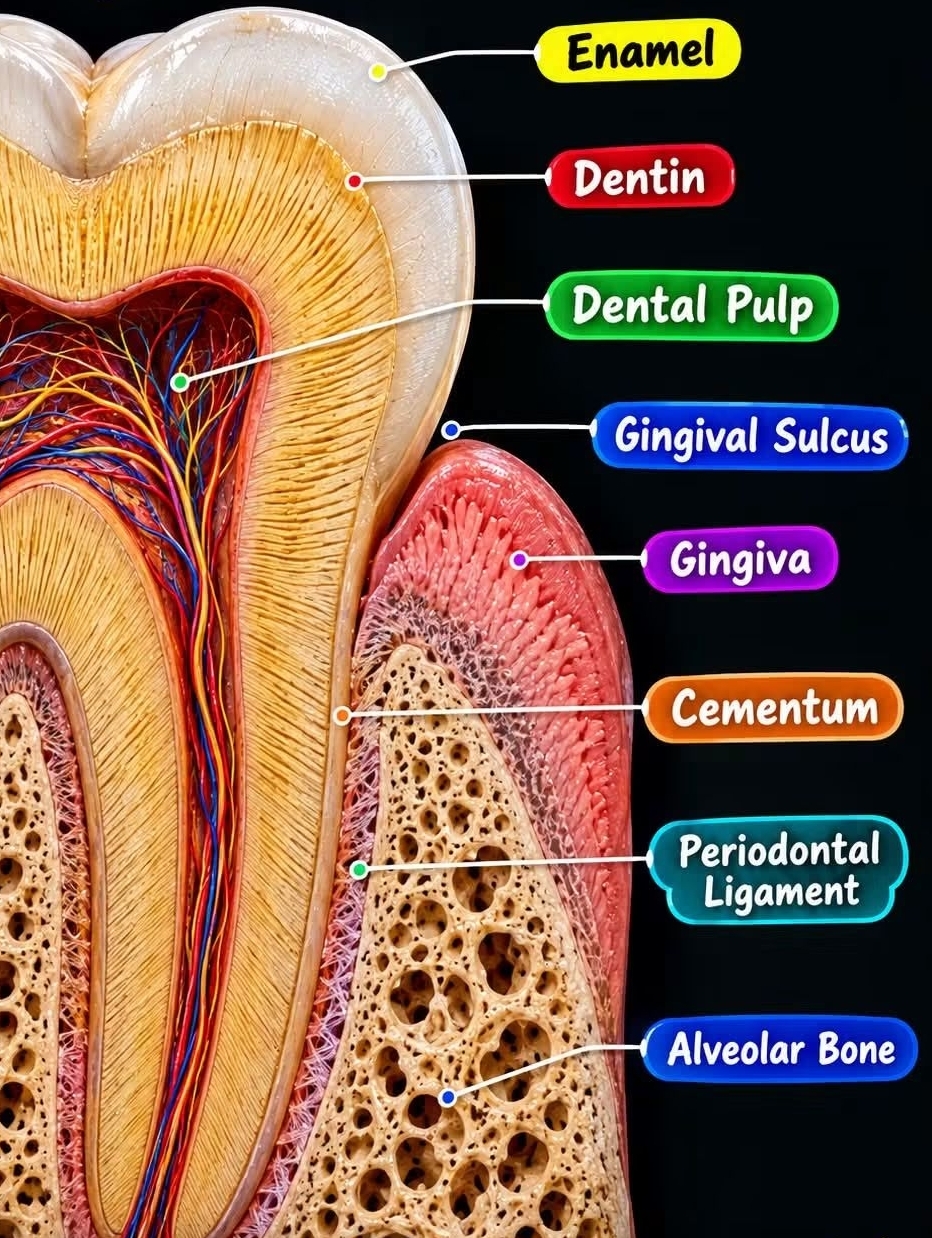
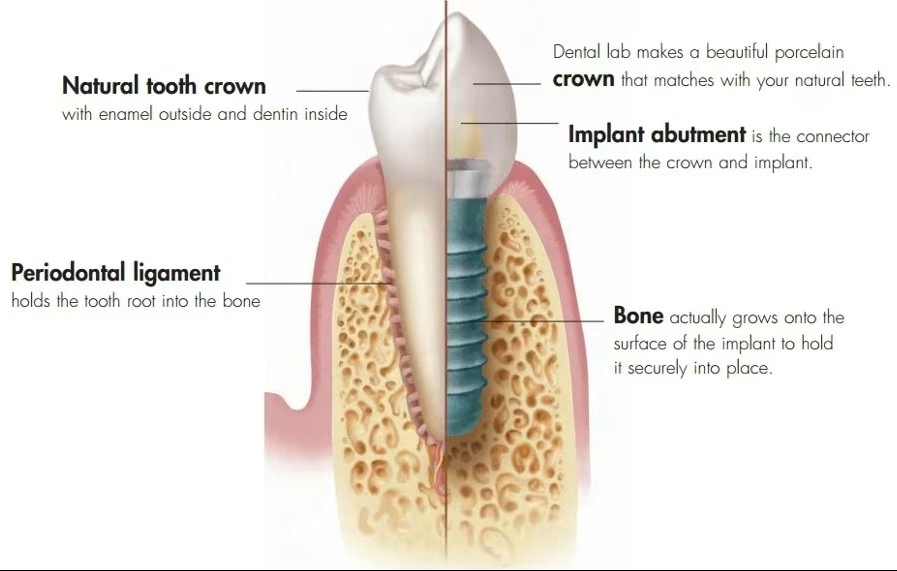
A natural tooth root is wrapped in a thin layer of tissue called the periodontal ligament, which is densely packed with sensory nerve endings capable of detecting even microscopic pressure. When a tooth is extracted, this ligament and its natural "pressure sensor" are lost permanently. Because an integrated dental implant fuses directly with the bone (osseointegration), the implant itself has no periodontal ligament.
However, your mouth relies on a backup team of sensory receptors located in surrounding structures:
The periosteum (bone lining)
Oral mucosa (gum tissue)
Masticatory (chewing) muscles
Temporomandibular joints (TMJ)
Periodontal ligaments of adjacent and opposing natural teeth
When you bite down on a dental implant, subtle mechanical deformations occur in the surrounding bone and soft tissues. These surrounding receptors send signals to your brain, allowing you to still feel subtle sensations—like biting into a grain of rice or a thin slice of food.
Important Note: Osseoperception does NOT mean growing a new periodontal ligament; it means surrounding tissues are stepping in to provide sensory feedback.
Two Key Differences to Keep in Mind
Higher Perception Threshold: In passive pressure tests, a dental implant requires greater force than a natural tooth before you feel it.
Narrowing the Gap During Active Chewing: Active biting involves feedback from muscles, joints, and gums working together. While you can bite into a thin piece of paper, an implant will still feel slightly less delicate than a natural tooth.
Core Advantages of Dental Implants
Why remain dental implants the gold standard for tooth replacement?
Strong Chewing Power: Rooted directly in the jawbone, implants offer superior stability and a biting force significantly stronger than removable dentures.
Protects Adjacent Teeth: Unlike dental bridges, implants do not require grinding down neighboring healthy natural teeth.
Preserves Jawbone Structure: Masticatory forces are transmitted directly into the jawbone, helping to slow down bone resorption after tooth loss.
Comfort & Aesthetics: Designed to match the look, color, and feel of natural teeth, eliminating the bulk and foreign-body sensation of traditional denture bases.
Long-Lasting Solution: With proper oral hygiene and routine dental checkups, implants offer long-term stability for decades.
Remember: Having Sensation Doesn't Mean You're Protected
Because dental implants have a higher sensory threshold, they cannot warn you as quickly when subjected to minor overloading. Biting sensations are also influenced by crown contour, opposing tooth material, chewing habits, and nighttime teeth grinding (bruxism).
If you feel a sense of numbness or awkwardness on one side, it may simply be normal post-surgical adaptation—or it could indicate a bite misalignment (occlusal imbalance). Never rely solely on subjective feeling; accurate diagnosis requires objective dental evaluations such as articulating paper tests and digital X-rays.
4 Essential Tips for Implant Patients
Set Realistic Expectations: Don't expect "zero sensation," nor should you expect it to feel "100% identical to a natural tooth." The most accurate description is: You have bite perception, but with slightly lower sensitivity than a natural tooth.
Adopt a Gradual Eating Pace: When your new crown is placed, start with softer foods. Avoid biting into hard, tough objects on a single point during the initial adjustment period.
Maintain Routine Checkups: Even if your bite feels completely comfortable, regular dental visits are necessary to inspect bite contact, hardware stability, surrounding bone levels, and soft tissue health.
Address Abnormalities Promptly: Contact your clinic immediately if you experience high bite spots, unusual clicking sounds, crown looseness, or repeated porcelain chipping. If you grind your teeth at night, ask your dentist for a custom night guard.
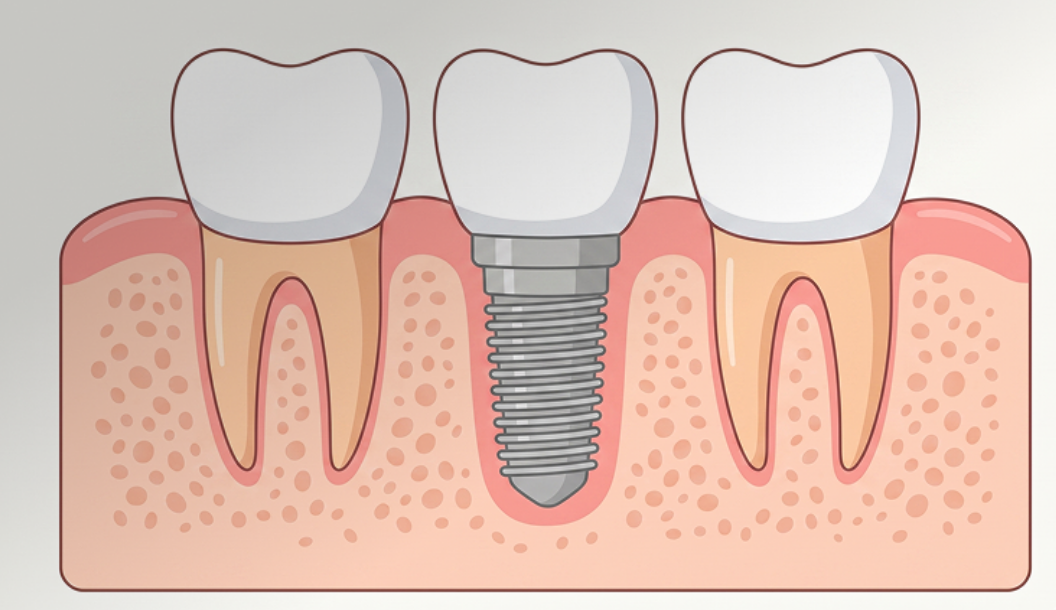
Guarding Your Smile with Osseoperception
"Osseoperception" is your mouth’s intelligent way of preserving your ability to chew naturally. While it cannot perfectly replicate a natural tooth in every micro-detail, it provides an exceptionally reliable balance of safety, comfort, and stability.
Experiencing tooth loss or bite discomfort?
Schedule a comprehensive oral examination and bite evaluation at our clinic today to discover the ideal treatment plan tailored for your smile.