Wedge-Shaped Defect: Why That Groove at the Gum Line Makes Your Teeth Sensitive
Wedge-Shaped Defect: Why That Groove at the Gum Line Makes Your Teeth Sensitive
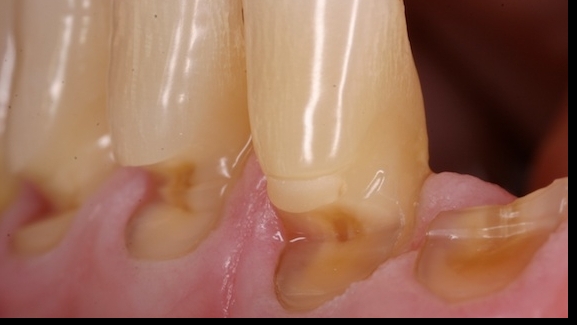
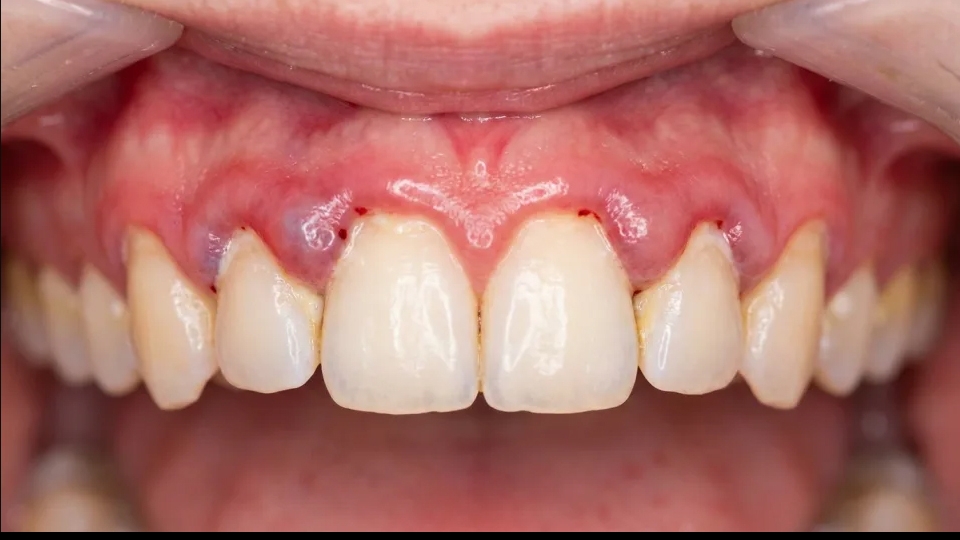
You step out of bed, start brushing, and the cold water hits the base of your tooth like a jolt of electricity. You take a sip of an iced drink and the same shooting sensation runs along the gum line. Many people assume their “nerve is exposed,” so they check in the mirror — and instead they find a shallow groove where the tooth meets the gum.
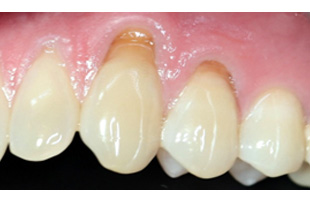
In dentistry, that groove is called a wedge-shaped defect, also known as a non-carious cervical lesion (NCCL). It is nothing like a cavity: decay leaves tooth structure black and soft, whereas a wedge-shaped defect is a clean, hard notch cut into the neck of the tooth.
Why a Tiny Groove Can Make Teeth So Sensitive to Cold, Heat, and Sweets
The Enamel Is Thinnest at the Cervical Margin
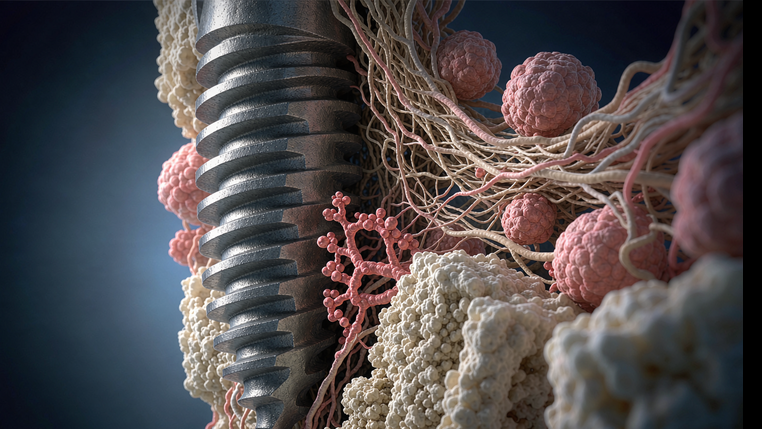
To understand the sensitivity, you first need to understand the anatomy of a tooth. The outermost layer is enamel — the hardest tissue in the human body, an armor plate that shields everything beneath it. Under the enamel lies dentin, which is packed with countless microscopic channels called dentinal tubules. These tubules run directly to the dental pulp, where the nerve endings sit.
The weak point is the cervical region, the neck of the tooth right at the gum line. Here enamel is at its thinnest — in some spots only a thin film — making it the least wear-resistant area of the entire tooth.
If you brush horizontally with heavy pressure, sawing back and forth across the cervical area year after year, that thin enamel is slowly abraded away. Once it is gone, the dentin underneath is exposed and the dentinal tubules open directly into the oral environment. From that point on, every exposure to hot or cold sends a distress signal straight to the nerve.
Once Dentinal Tubules Are Exposed, Sensitivity Begins
The explanation most widely accepted in the scientific literature is the hydrodynamic theory, which remains the leading model for dentin hypersensitivity.
The logic is straightforward. Dentinal tubules are filled with fluid. When dentin is exposed, external stimuli — cold, heat, acid, sweets, mechanical friction — act on the open tubule apertures and cause that fluid to move rapidly. Research has measured fluid movement at speeds of up to 4 mm per second. This rapid flow disturbs the A-delta nerve fibers surrounding the odontoblasts in the superficial pulp — think of them as the tooth’s alarm sensors. The fluid moves, the alarm trips, and the brain registers pain.
Cold makes the fluid flow outward; heat makes it flow inward. The direction differs, but any flow at all activates the nerve.
When the enamel is intact, no stimulus ever reaches the tubules. The fluid stays still and the nerve is left undisturbed. Once a groove cuts through the enamel, the tubule apertures are open, the fluid starts racing back and forth — and the nerve starts sounding the alarm.
Brushing Is Not the Only Cause
Horizontal brushing is the leading factor, but cervical abrasion from brushing is usually the product of several forces acting together.
Acid Erosion Plays a Major Role
Gingival crevicular fluid is itself slightly acidic. Add frequent carbonated drinks, acidic foods, or gastroesophageal reflux (GERD), and the hard tissue at the cervical margin becomes softened by acid. Brush over softened enamel and the wear rate accelerates dramatically.
Occlusal loading works quietly in the background as well. During chewing, the cervical region is an area of stress concentration. If you have an abnormal bite, bruxism (night grinding), or a long-standing habit of chewing on one side, the cervical area absorbs greater force, develops internal micro-cracks, and becomes even easier to wear away. Dentists call the resulting notch an abfraction.
So a wedge-shaped defect is never the result of a single cause. Brushing technique, the acid balance of the mouth, and occlusal habits stack on top of one another. Only after years of accumulation does that groove finally get sawn into the tooth.
Deep Grooves Are Not Always the Most Sensitive
You might assume that the deeper the groove, the worse the sensitivity. That is not strictly true. Defect depth and sensitivity are not strictly proportional, and there is wide individual variation.
Some patients have a very shallow groove but highly patent dentinal tubules, so fluid flows freely and sensitivity is pronounced. Others have a deeper defect with tubules partly sealed by mineral salt deposits — so-called sclerotic dentin — and their symptoms are comparatively mild.
That said, progression of the defect does bring more serious consequences:
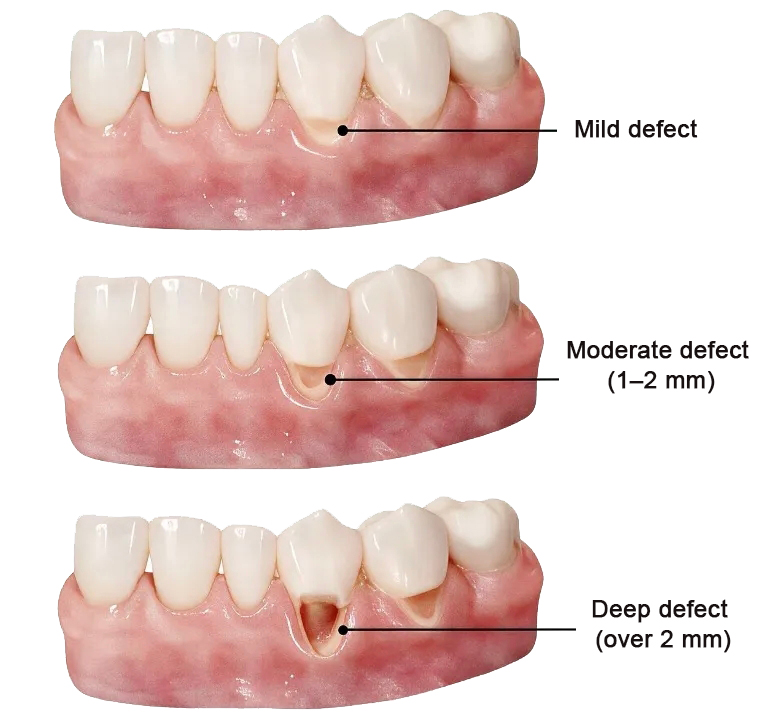
Mild defect: may cause only slight sensitivity.
Moderate defect (1–2 mm): dentin is exposed, and hot, cold, acidic, or sweet stimuli produce clear aching.
Deep defect (over 2 mm): the lesion approaches or penetrates the pulp, which can cause spontaneous pain and night pain, and may even lead to a horizontal fracture of the tooth at the defect.
The Three Stages of a Wedge-Shaped Defect
Mild (shallow) defect
The groove is shallow, and most people feel no obvious soreness.
Moderate defect
The lesion has reached the dentin layer. Cold and acidic foods readily trigger sensitivity.
Severe defect
The defect is deep and lies close to the pulp chamber.
Already Have a Groove? Here Is What to Do
Shallow and nearly symptom-free. The priority is correcting your brushing technique. Switch to a soft-bristled toothbrush and the Bass brushing method, and consider a desensitizing toothpaste as support.
Clear sensitivity to hot, cold, acidic, or sweet stimuli, but a shallow groove. A professional desensitizing treatment or a desensitizing toothpaste is usually enough.
Moderate depth. The defect should be restored with composite resin or glass ionomer material, sealing the notch and blocking external stimuli from reaching the nerve through the exposed dentinal tubules.
Pulp involvement. Root canal treatment is required.
Prevention: One Change Matters Most
Stop brushing horizontally.
Search online for a video or animation of the Bass brushing technique. Angle the bristles 45 degrees toward the gum line, aim into the gingival sulcus, and use small horizontal vibrations rather than long strokes. This is the most cervical-friendly way to brush.
At the same time, cut back on acidic beverages, and see a dentist promptly if you grind your teeth at night or have a bite problem. Each of these steps takes load off the cervical region.
A groove at the gum line is essentially a gap in the tooth’s protective layer. Once that gap forms, the dentinal tubules are exposed, the fluid moves, and the nerve fires — the chain of sensitivity starts, link by link. Spot it early, correct it early, treat it early, and a small groove never has to become a bigger dental problem.
Frequently Asked Questions
What exactly is a wedge-shaped defect?
It is a V-shaped notch in the neck of a tooth, at or slightly below the gum line. It forms when enamel is lost through abrasion, erosion, or occlusal stress, exposing the dentin underneath. Because it is not caused by bacteria, dentists classify it as a non-carious cervical lesion rather than a cavity.
Is a wedge-shaped defect the same as a cavity?
No. Dental decay is a bacterial process that softens and darkens tooth structure. A wedge-shaped defect is a hard, clean-edged loss of tooth substance with no bacterial involvement. The two can, however, exist side by side on the same tooth, so a dentist should confirm the diagnosis.
Can a wedge-shaped defect heal on its own?
No. Enamel and dentin do not regenerate. Early lesions can be stabilized, and sensitivity can be controlled, but the lost tooth structure does not grow back. Deep defects need a filling.
Does a wedge-shaped defect always need a filling?
No. Shallow, asymptomatic defects can usually be managed by correcting your brushing technique and using desensitizing products. Filling with composite resin or glass ionomer is generally recommended for moderate to deep defects, or when sensitivity is significant.
Why does cold water suddenly hurt my teeth at the gum line?
Cold triggers rapid fluid movement inside the exposed dentinal tubules. That movement stimulates A-delta nerve fibers at the pulp, which the brain interprets as a sharp, short-lived pain.
What is the best toothpaste for a sensitive tooth with a groove?
Look for a desensitizing toothpaste that blocks open dentinal tubules. Potassium nitrate and stannous fluoride are the two most commonly studied active ingredients. Toothpaste reduces symptoms but does not repair the groove itself, so pair it with a better brushing technique.